Why Transitions Matter
As summer comes to an end, families are beginning to prepare for the upcoming school year. For some, that means backpacks are packed, school supplies are purchased, and calendars begin to fill with new schedules and activities. Yet, it can also be a significant transition for children and families.
For children with disabilities and other support needs, moving from the flexibility of summer to the structure of the school day may require additional preparation and support. Changes in routines, environments, expectations, and daily activities can feel overwhelming, particularly for children who rely on predictability and consistency.
The good news is that families can take small steps before and during the first weeks of school to help make this transition more manageable.
Why Are Transitions So Difficult?
The transition from summer to school involves much more than changing a bedtime. It may mean adjusting to a new schedule, classroom environments, activities, social situations, teachers and support staff, and so much more. For some children, these changes can require significant emotional and mental energy. It may involve taking more energy to focus, or navigating new emotional responses, such as nervousness, fear, or even anxiety as they engage in new and unfamiliar spaces. Sensory processing challenges can also make new or busy environments more difficult to navigate.
Important to remember is that challenging behaviors observed during a transition period do not necessarily mean that a child is being “difficult” or refusing to cooperate. Resistance, avoidance, frustration, or emotional outbursts are often a child’s way of communicating that a change feels overwhelming or that they need additional support. Understanding what may be behind a child’s reaction is an important first step toward helping them.
Start Preparing Before the First Day
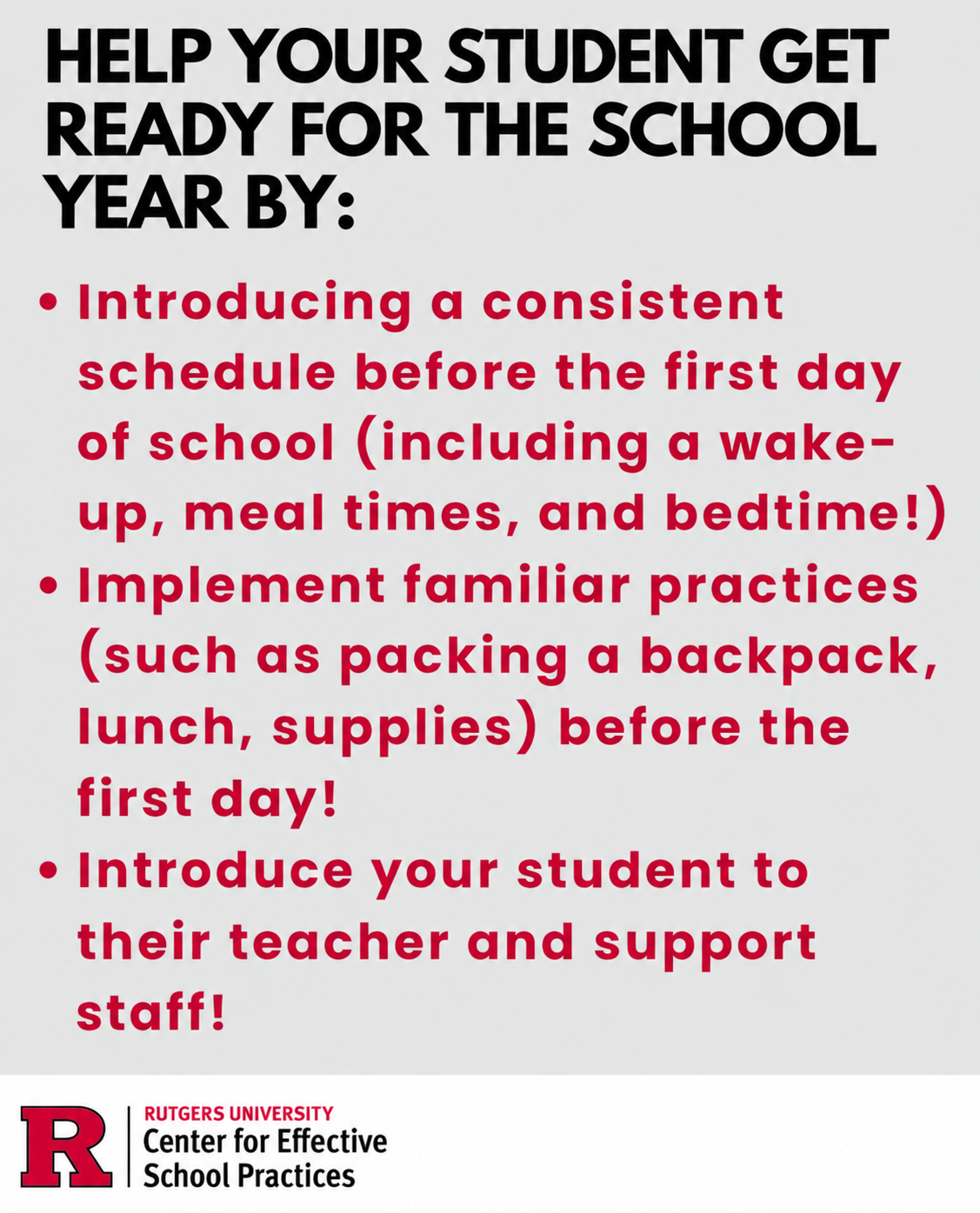
One of the most helpful ways families can support a transition is by preparing gradually rather than waiting until the night before school begins. Families can begin reintroducing parts of the school-year routine a few weeks before the year starts. Such changes can include adjusting bedtime and wake-up times, establishing regular mealtimes, or creating a more predictable morning routine.
Families can also practice specific parts of the school day ahead of time. This may look like practicing getting dressed, packing their backpack, or eating breakfast. A visual schedule can be a great way to supplement this practice (more below). These small opportunities introduce students to a new environment, and also establish familiarity with consistency and time. If possible, establishing a meet and greet with teachers and other support staff can also be beneficial to establish familiarity with the adults the student will interact with.
Make the New Routine Predictable
Predictability can be especially helpful during periods of change. Consider creating a visual schedule that shows what your child’s morning, school day, and afternoon will look like. Depending on the child’s needs and preferences, this could include pictures, written instructions, or a combination of both. It can also be helpful to preface the changes students may soon be experiencing, whether it’s a new schedule, system, or more. Giving children information about what to expect can make a new experience feel more manageable. At the same time, families should recognize that not everything can be predicted. Helping children practice flexibility and cope with small changes is also an important part of preparing for the school year.
Listen to Your Child’s Concerns
Not every child will say, “I’m anxious about going back to school.” Instead, concerns may appear as changes in typical behavior, difficulty sleeping, irritability, avoidance, or physical complaints. If your child expresses worry about returning to school, listen and acknowledge those feelings rather than immediately trying to make them disappear. Validating statements such as, “I can understand why that feels difficult,” or “It can be hard to start something new,” can help children feel heard. When appropriate, families can then work with their child to identify strategies for handling specific worries. Encourage them to share their preferences and communicate steps and methods they can use to get ready for the transition. Asking them what they would prefer to do first and how they would like to do it allows the student to develop their own autonomy and level of comfort, while simultaneously transitioning them to a new schedule and environment.
Partner With Your Child’s School
Families do not have to navigate the transition alone. If your child has access to additional supports, communicate with their teacher and Child Study Team before the school year begins. Sharing information about current routines, strategies, communication preferences, sensory needs, and previous successful transition strategies can help school staff understand how to support your child.
Families might also ask whether their child can visit the classroom, meet their teacher, or practice entering the school before the first day. For children who have difficulty separating from caregivers, it may be helpful to plan ahead for who will greet the child and help them get settled into the classroom. These conversations can help create consistency between home and school and give children a stronger sense of what to expect.
Remember: A Bumpy Start Is Still a Start!
Perhaps the most important thing families can remember is that the transition does not have to be perfect. The first day, or even the first few weeks, may not go exactly as planned. A child may resist getting ready, become overwhelmed at drop-off, have difficulty adjusting to a new schedule, or generally need more support than expected. These experiences do not necessarily mean that the strategies are not working or that the school year will be unsuccessful. Adjusting takes time.
Rather than expecting children to immediately return to a full school-year routine, give them opportunities to practice, slowly adjust, and build confidence. Celebrate small successes, maintain consistent routines when possible, and continue communicating with your child’s support team. Children may need time to ease into new expectations, and parents can help by being realistic and responding to challenges with patience and encouragement.
A New School Year, One Step at a Time
The transition from summer to school is a big change for children, and for families. For children with disabilities and other support needs, preparation, predictability, communication, and consistency can make that change feel more manageable. There is no single strategy that will work for every child. What matters most is getting to know what helps your child feel safe, prepared, and supported, and then building those strategies into the transition.
A successful transition does not necessarily mean that every morning goes smoothly. Sometimes success looks like getting through a difficult morning, trying a new strategy, asking for help, or taking one small step toward becoming comfortable with a new routine. As the new school year begins, remember: it is okay for transitions to take time – and they often do! With preparation, patience, and support, children can build the confidence they need to navigate change, one step at a time.
Helpful Resources
Families looking for additional information about supporting children through transitions may find the following helpful: