
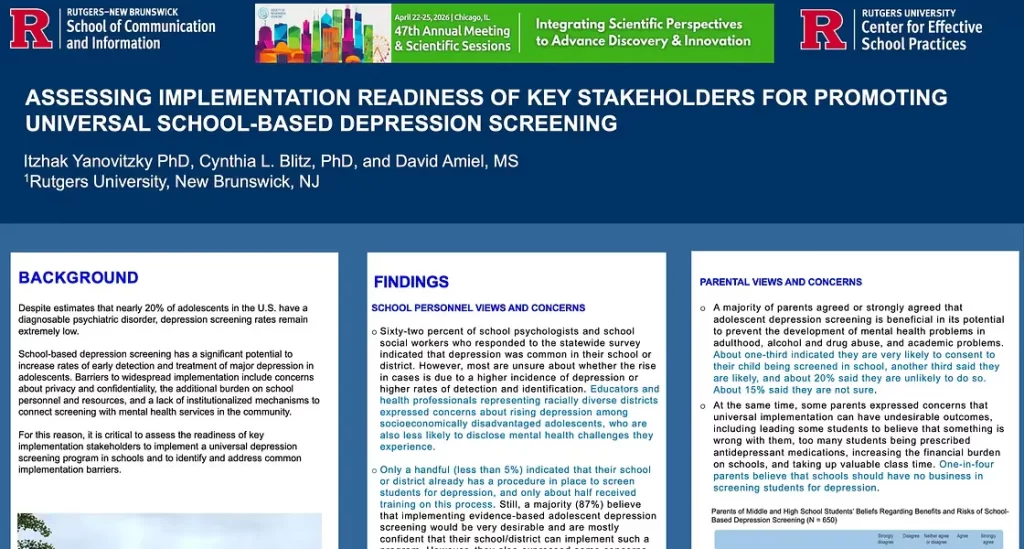
Presented at the 2026 Society of Behavioral Medicine Annual Meeting, this poster examines the readiness of parents, educators, and mental health professionals to implement universal school-based depression screening. The findings offer insights into the opportunities, concerns, and resources needed to support student mental health through early identification and intervention.
By Anna Lasek, Communications Assistant at Rutgers CESP
School-Based Depression Screening: What Parents and Educators Need to Know
Youth mental health is an important center of discussion in schools across the country. While many young people experience symptoms of depression, anxiety, and other mental health conditions, these concerns often go unnoticed until they begin affecting a student’s academic performance, relationships, or overall well-being.
One strategy receiving growing attention is school-based depression screening. This process is designed to identify students who may be experiencing symptoms of depression and connect them with appropriate support. But how do parents, educators, and mental health professionals feel about this approach?
Researchers from Rutgers University’s Center for Effective School Practices (CESP) and School of Information and Communication recently explored this question through a statewide study examining the readiness of key stakeholders to implement universal school-based depression screening which has significant potential to “increase rates of early detection and treatment of major depression in adolescents” (Blitz et al., 2026).
Why Depression Screening Matters
Research suggests that nearly one in five adolescents has a diagnosable mental health disorder. Yet many students never receive the support they need because their symptoms go unrecognized.
Schools are uniquely positioned to help identify concerns early as educators are often among the first adults to notice changes in behavior, attendance, or academic performance in students. With the right structure and support, school-based screening has the potential to help connect students with help.
What Parents Are Saying
This study found that most parents recognize the potential benefits of depression screening, particularly within its ability to identify concerns early and also help prevent future challenges related to mental health, substance use, and academic success.
However, some parents expressed concerns about student privacy and confidentiality, while others questioned whether screening could lead students to view themselves negatively. Parents also raised questions about the screening process, whether schools would have sufficient resources to support students identified through screening, and what follow-up services would be available if additional support is needed.
These concerns highlight an important reality: successful mental health initiatives require strong communication and true partnership between schools and families.
What Educators Need to Succeed
School psychologists, social workers, and other school personnel surveyed expressed strong support for depression screening. Most participants believed screening could benefit students and felt their schools could play a meaningful role in supporting implementation.
Educators emphasized the need for:
- Clear guidance about screening procedures
- Training for staff responsible for implementation
- Defined protocols for responding to screening results
- Adequate funding and staffing
- Strong partnerships with community mental health providers
Screening is only one piece of a larger system of support. Schools must also have plans in place to help students and families access services when concerns are identified.
Building Trust with Families
One of the study’s most important findings was that concerns varied across communities. Some parents, particularly parents from historically underserved communities, expressed greater concerns about privacy, misunderstandings of screening questions, and access to follow-up mental health services.
These findings underscore the importance of involving families in planning and implementation efforts. Schools can build trust by communicating openly about how screening works, how student information is protected, and what support options are available for students and families.
Looking Ahead
The study suggests that there is considerable support for school-based depression screening among parents, educators, and mental health professionals. At the same time, stakeholders emphasized that implementation should be thoughtful, well-resourced, and responsive to community needs.
As schools continue exploring ways to support student well-being, understanding the perspectives of those most affected—students, families, and educators—remains a critical first step.
References
Blitz, C. L., Amiel, D. J., & Yanovitzky, I. (2026, April 24). Assessing implementation readiness of key stakeholders for universal school-based depression screening [Poster presentation]. 47th Annual Meeting & Scientific Sessions of the Society of Behavioral Medicine. https://sbm.secure-platform.com/site/solicitations/102003/sessiongallery/94354